POKERSLATE JOURNAL

Strategy

Learn one decision at a time, from your first hand to thoughtful review.

All articles

28

Before a River Hero Call: Run the Five-Question Checklist, Then Read Linear vs. Polarized

Facing a river bet with a marginal hand, check first whether you beat some value, whether the opponent can bluff, whether you gave bluffing room, whether the sizing is significant for the stakes, and how much non-showdown value sits in the range. The speaker also discusses turning into a raise-bluff: the key is which stronger hands will fold, not the linear or polarized label alone.

Read the guide
Curiosity calls vs. logic calls: bluff-catching in deep-stacked live games through two river decisions

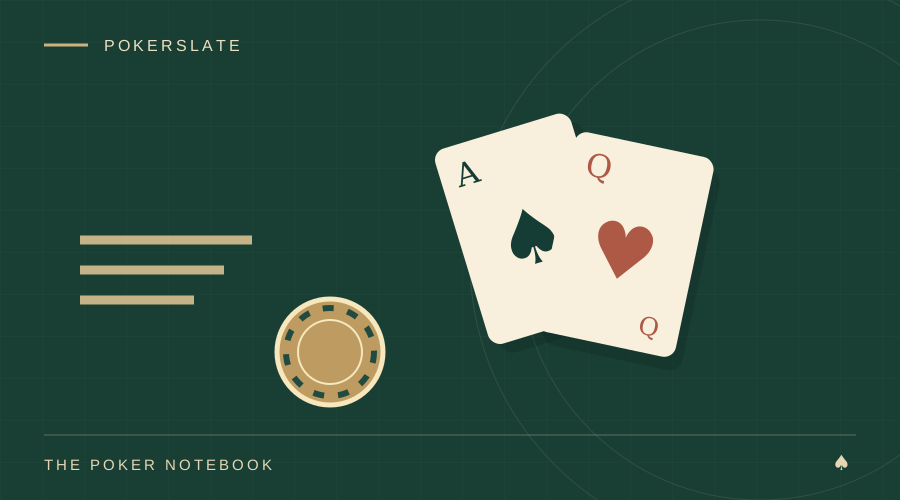
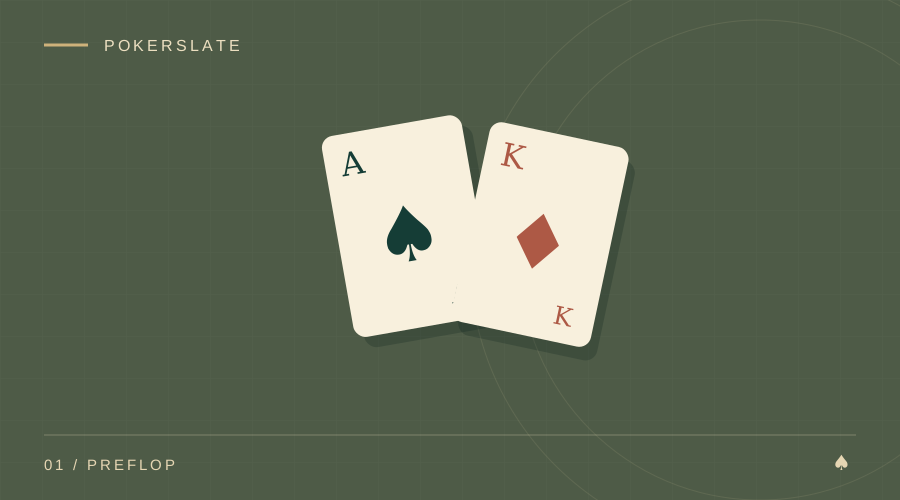
In a Bellagio 25/50 cash game, Brad Owen uses one failed curiosity call and one successful logic-based call to make a single point: river calls should pay for story and range logic, not for the urge to see cards. This article contrasts AQ paying off on a paired board with 77 calling against an inconsistent story, and uses a KJ nut-straight turn raise to show when strong hands should build the pot directly.

Read the guide

Tournament Preflop System for Your Stack Depth: Position, Range Shapes, and Sizings

Run your tournament preflop by effective stack depth: deeper stacks make position more valuable, so you tighten early and widen late, while shallower stacks mean smaller sizes and more all-ins for you. You get the position-vs-depth relationship, the five linear polarized capped uncapped condensed range shapes, and open sizes from 80+ big blinds down to below 9, plus play against limpers.

Read the guide

Poker Players Only Make Two Mistakes: Broken Logic vs Bad Calibration

The speaker argues table mistakes come in only two kinds: logic breaks where the plan contradicts itself, and calibration errors where the logic is consistent but the pool read is wrong. This article uses one-shot turn bets, polarized rivers, completing boards, and multiway pots as hypothetical hands to reconstruct how to tell the two apart and fix each.

Read the guide

When to Slow-Play Sets in GTO: From the 7-4-2 Two-Tone Board to Straight Turns

GTOWizard uses a solver to map the slow-play boundary for sets: on a 7-4-2 two-tone board sets almost never check on their own, because their equity sits in the 90%–100% bucket whose matching pot size is near all-in, so trapping slots belong to 80%–90% hands like pocket aces. Only when the turn brings a straight, the board pairs, or the flop itself used a small bet do sets start mixing checks; and after slow-playing, facing a good card plus an opponent bet, they almost always raise.

Read the guide

Multiway Pots in 20 Questions: Ask Whether You Get Stabbed Before Betting

A 20-question multiway quiz from Hungry Horse Poker: as the preflop raiser, first ask whether the board gets stabbed, then bet small on dynamic wet boards and big on static dry ones; top pair with a medium kicker in a four-way pot may not even be worth betting, and only play king-high-plus flush draws; button calls, pros firing into multiple players, and recreational players' big sizes are three instant-fold signals; uncapped and donk reads come down to position and action sequence.

Read the guide

Called Down With KK: A Calling Framework for an Overpair Against Pure-Air Aggression

Big-blind KK raises to 100 over five limpers to isolate heads-up, calls a small raise on a Q-T-7 two-spade board on price, keeps calling with a king-high flush draw on the turn, and calls a 287 shove that is small relative to the pot on the river — beating a three-street pure bluff with offsuit A-6. The article reconstructs the price logic of the hand and contrasts it with six same-session hands on slow-playing, thin value, and fold discipline.

Read the guide